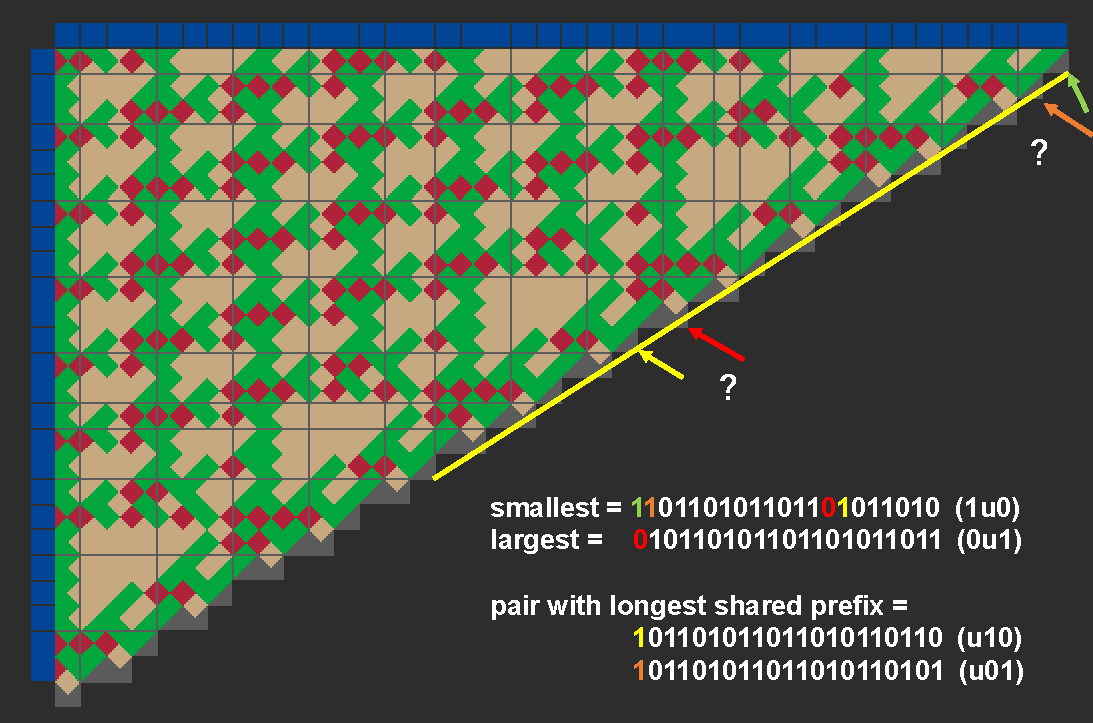
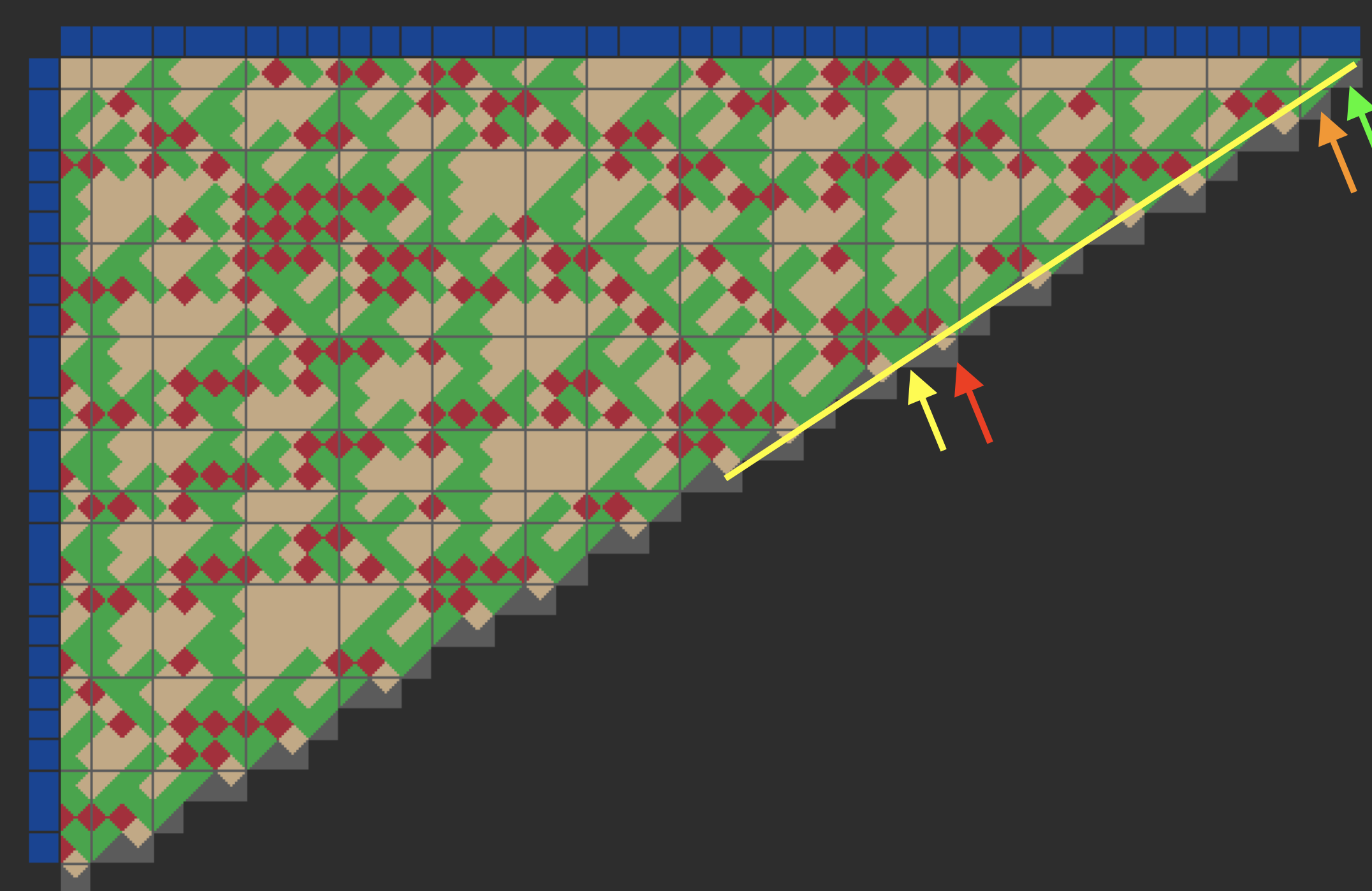
@mathkook has a very beautiful result about the “opposite” of Collatz circuits which he calls high cycles and he shows that they cannot be integer and, surprisingly, the proof does not involve Baker-style heavy artillery. Their parity vectors correspond to Christofell words, here is Python code to generate them:
def upper_christoffel_word(n: int, k: int) -> str:
    word = []
    for i in range(n):
        if (i + 1) * k // n > i * k // n:
            word.append('1')
        else:
            word.append('0')
    return ''.join(word)[::-1]
However, unlike circuits, it seems difficult to give a closed formula for their cyclic rational.
I wanted to share the following images which suggests that, close to the parity vector, all Christofell words are able to generate the same following pattern:
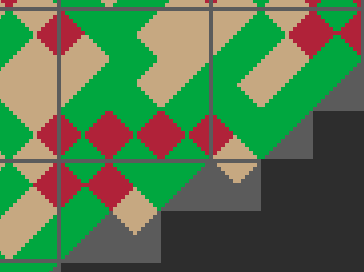
Here is examplified on three of them (using enough repetitions to see the pattern):
11011010(Example 4.2)

110110101101101011010(Example 4.3)

1101011010110101101011010110101101011010(length 40, 24 ones)
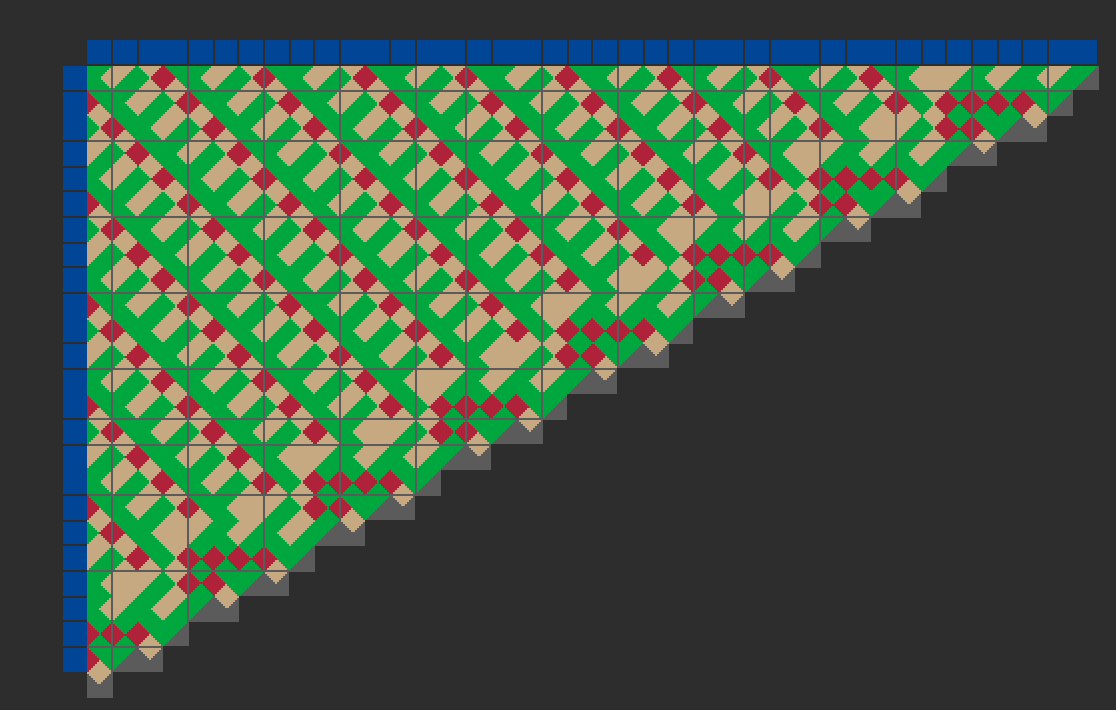
It is the first time that I see a family of parity vectors that is able to sustain the same kind of pattern close to the parity vector (but yes, it seems to diverge into more complex stuff when you go away).