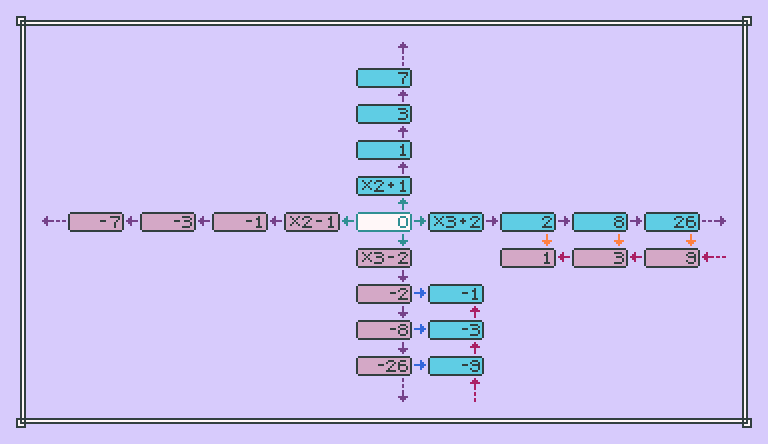
Oh my dear, why didn’t I discover this earlier? It would have made things so much easier for me to understand what I created.
I decided to take a proper look at this system mainly to try and see if I can predict the irregularities of the /2 part of the Collatz Conjecture that comes after the upward comparison. I found out I didn’t have to and I will try to explain why.
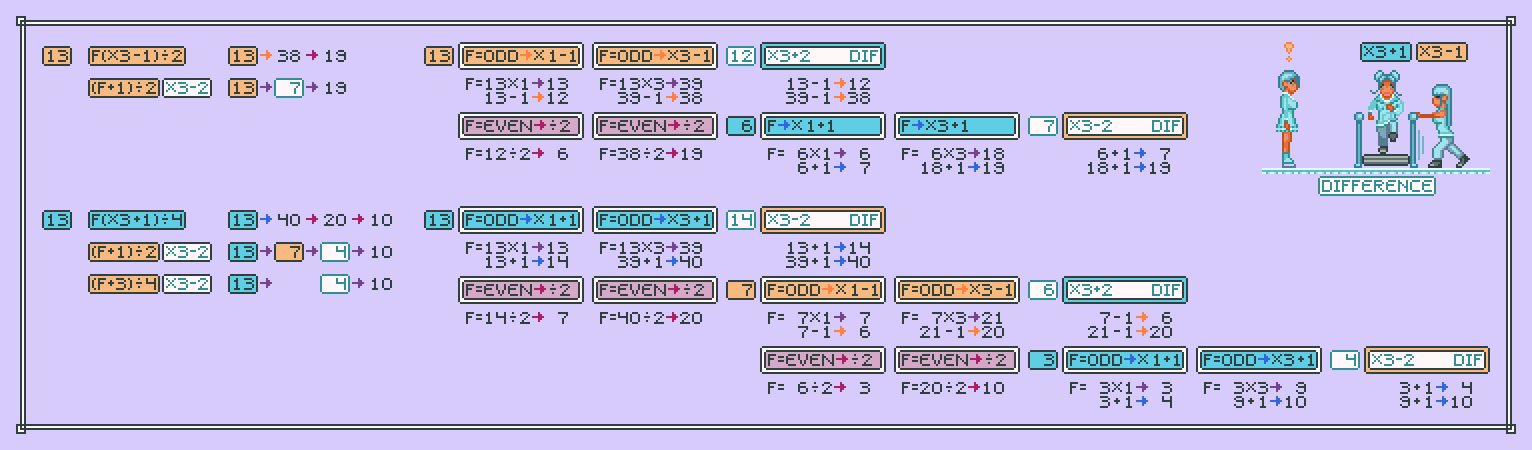
As explained in one of my previous posts we have 2 types of numbers we can compare:
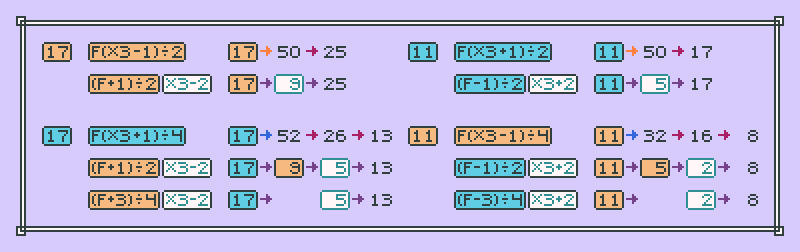
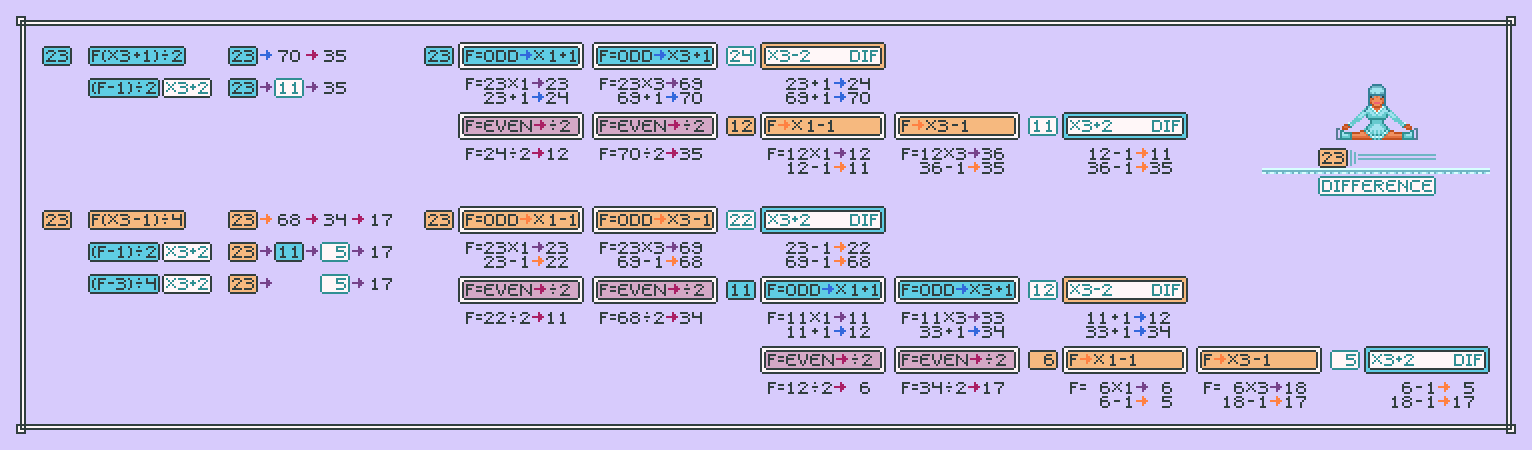
3n+1 /2 and 3n-1 /4 numbers, for example number 23:
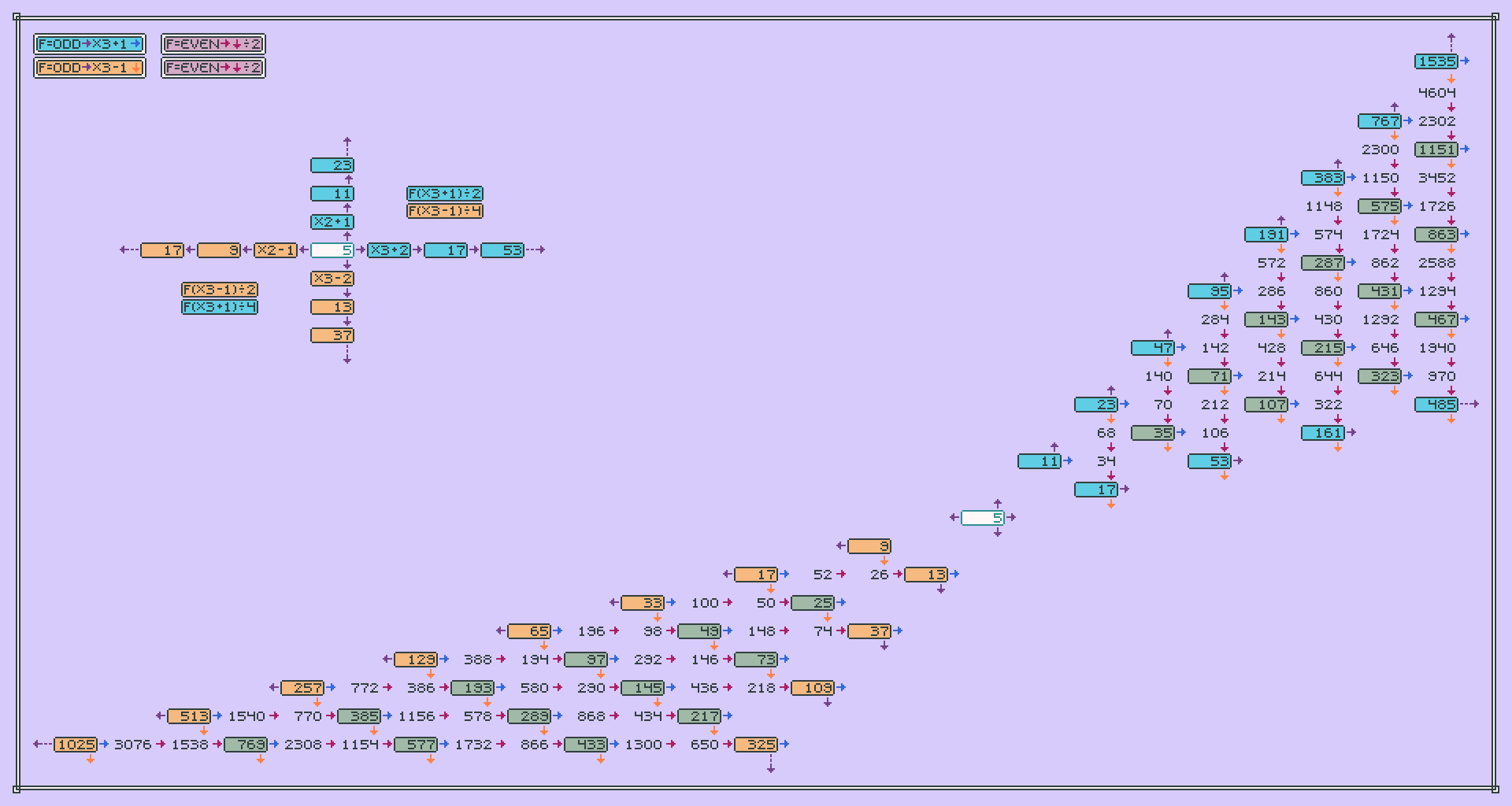
Perfect! This fits inside the system and we can continue with numbers 35 and 17 for our formulas without any problems. You will find 23 on the blue 3n+1 /2 and 3n-1 /4 side or as I like to call it the 3n+1 up side:
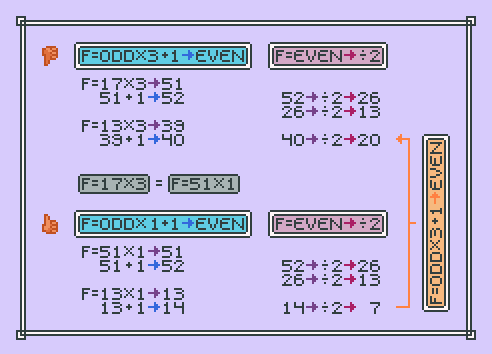
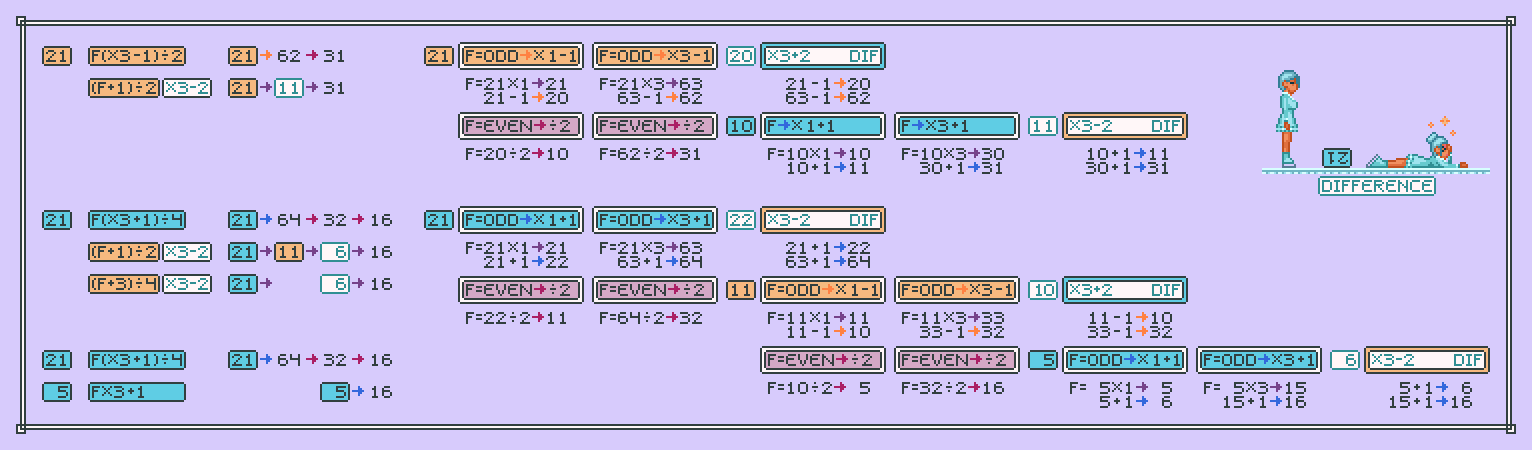
3n-1 /2 and 3n+1 /4 numbers, for example number 21:
But wait a minute Stacey, this is incorrect. We are not done with dividing after 21x3+1 /4 = 16. A 21 should become a 3n+1 /64 number which will causes the /2 irregularities in the sequences we can’t predict.
Well, something extremely simple happens, something a lot of people here have already figured out. The 21 is connected to the 5 by -1/4 (remember this is the 3n-1 /2 and 3n+1 /4 side or the 3n+1 down side, hence the -1)
This very simple fact is a fail-safe system the Collatz Conjecture is using in the background to link up all of our uneven numbers. Any number that exceeds her 3n+1 /4 when dividing will get caught by this system and gets automatically linked to another uneven number which goes back into the system. This will repeat itself until the number fits again.
Now consider this:
- 50% of all uneven numbers will go up 3n+1 /2 and will hit a higher uneven number.
- 25% of all uneven numbers will go down 3n+1 /4 and will stay within the system to either go back up 3n+1 /2 or go down 3n+1 /4 again.
- The remaining 25% of all uneven numbers will get caught by the fail-safe system and gets assigned a new number to take over the sequence.
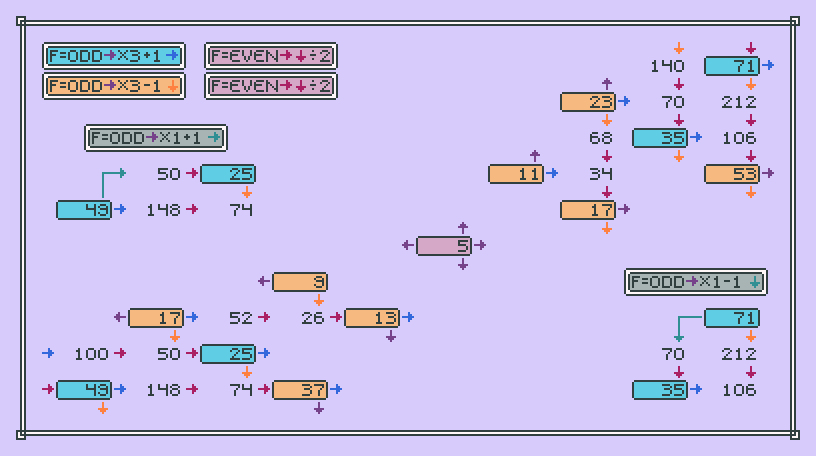
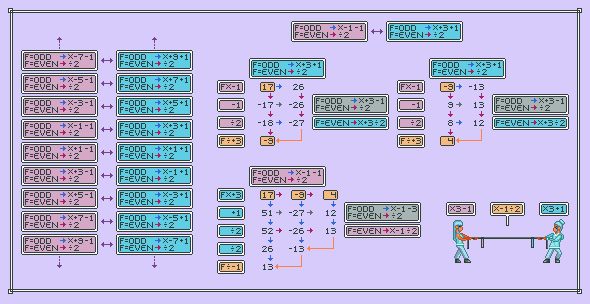
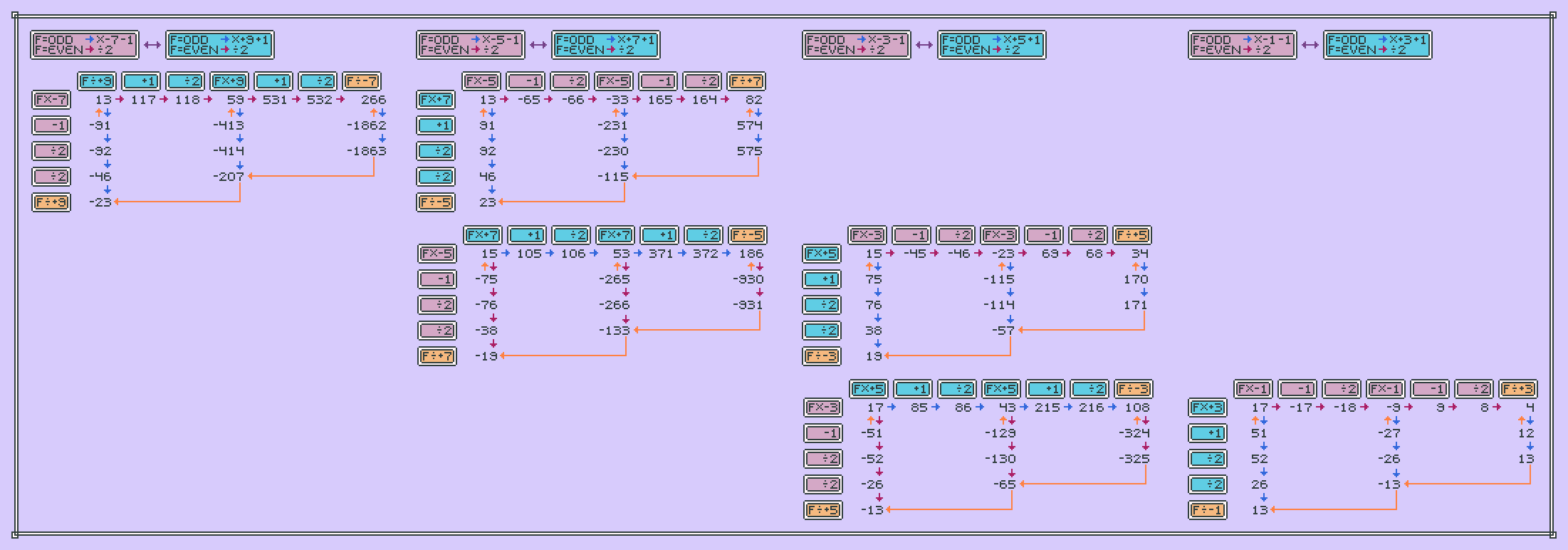
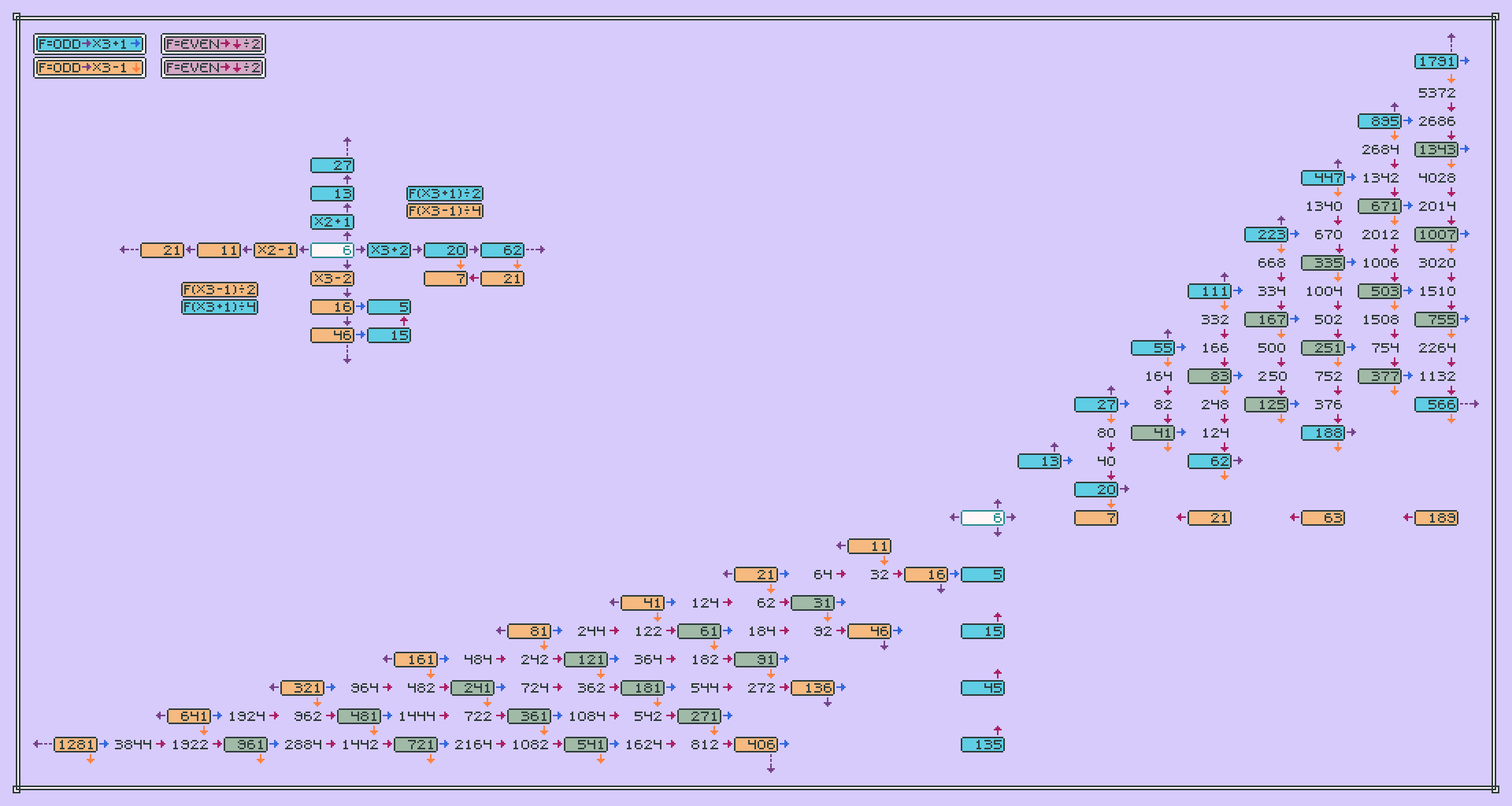
But that is not all. The fail-safe system is stacked by x3 for every uneven number x3-2 and because of this other sequences that are stacked on top of other numbers by x2-1 will drop into the same system!
As you can see the 21 is on the yellow side and it will stay within the system by turning into a 5. Now we can compare the 3n+1 and 3n-1 sequences without having to worry about a number not being connected or going rogue to create new loops. In this case our base number happens to be a multiple of 5, which increases or decreases by 2 for every next even difference.
Unfortunately Nully is the culprit and responsible for the loops. She is the extra slice tugged in within the system and she is pushing away all the numbers on both sides.
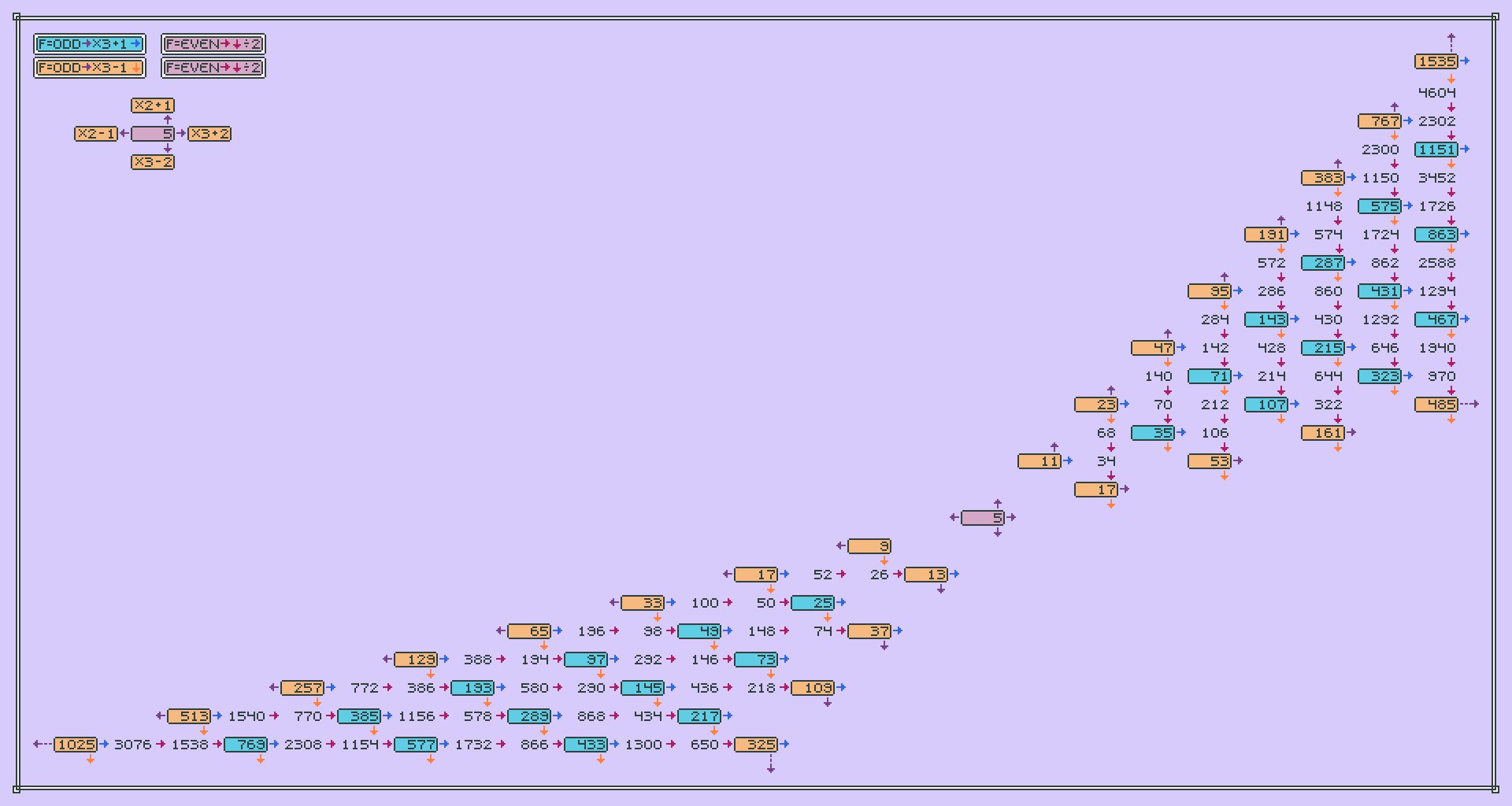
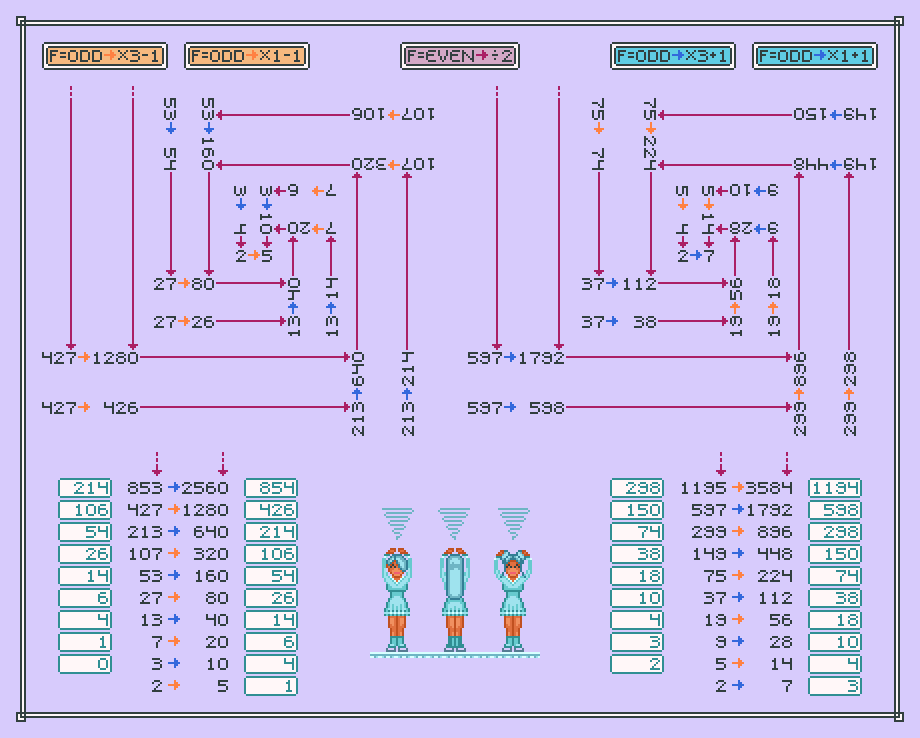
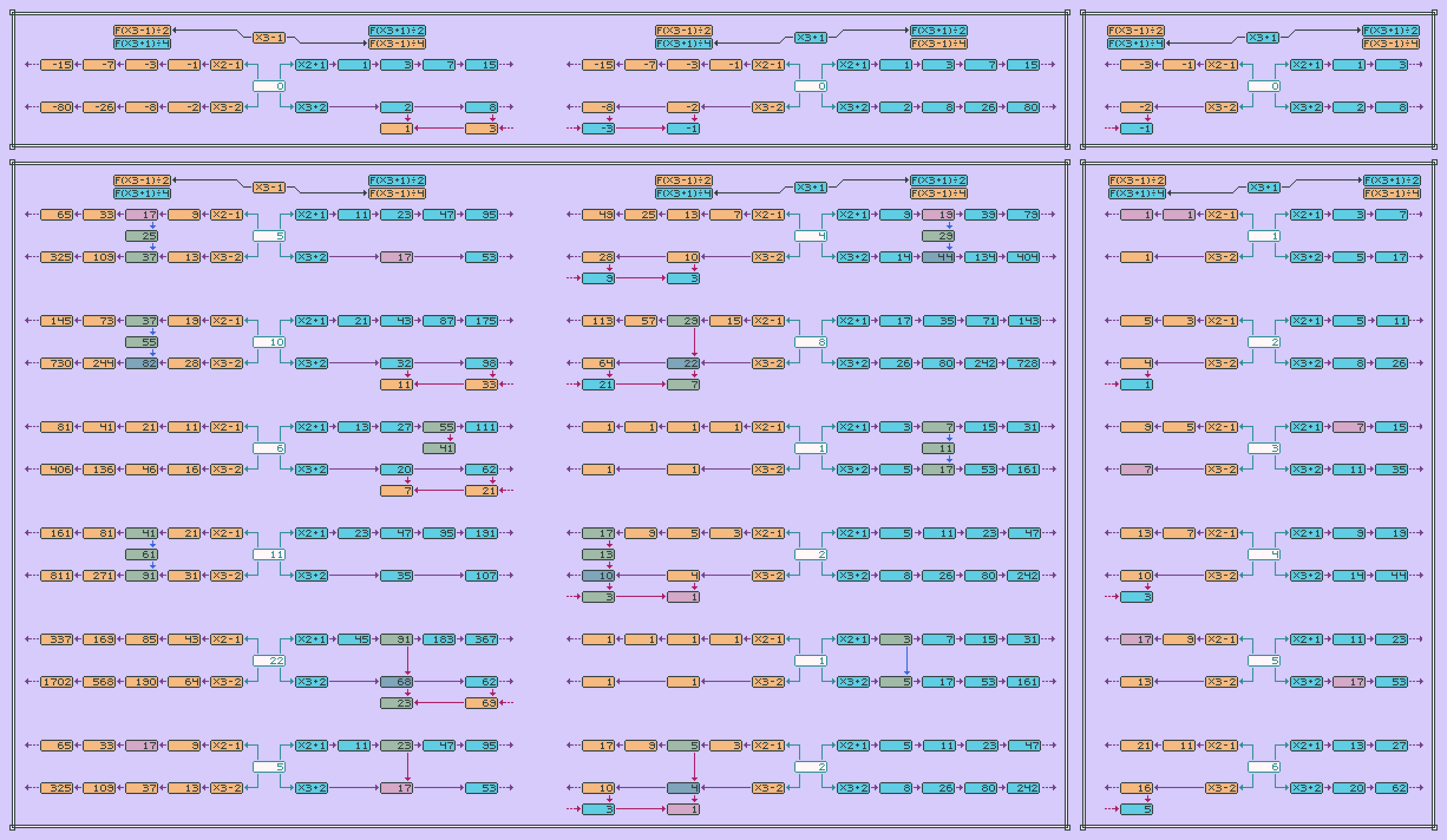
So I adjusted the artwork accordingly. It is hard to see because it is such a tiny part of the bigger picture, but the fail-safe numbers are now in there:
Personally I think it is such a beautiful way to show the 3n+1 and 3n-1 loops and all the other numbers stacked on top of them. It reminds me of an MRI device giving you the slices you want to study, except that this one goes on into infinity for both - and + sides.
I just had to make sure all of the numbers were included and now I know they are because of the fail-safe system. One that was staring me in my face for so long that I felt silly for a whole week for not figuring it out sooner. It is just something I wanted to share with you and I hope you enjoyed the read.